
What Is the 3-3-3 Rule for TV Protection? How to Protect Your TV Screen
16 August 2026 · Richard Sands
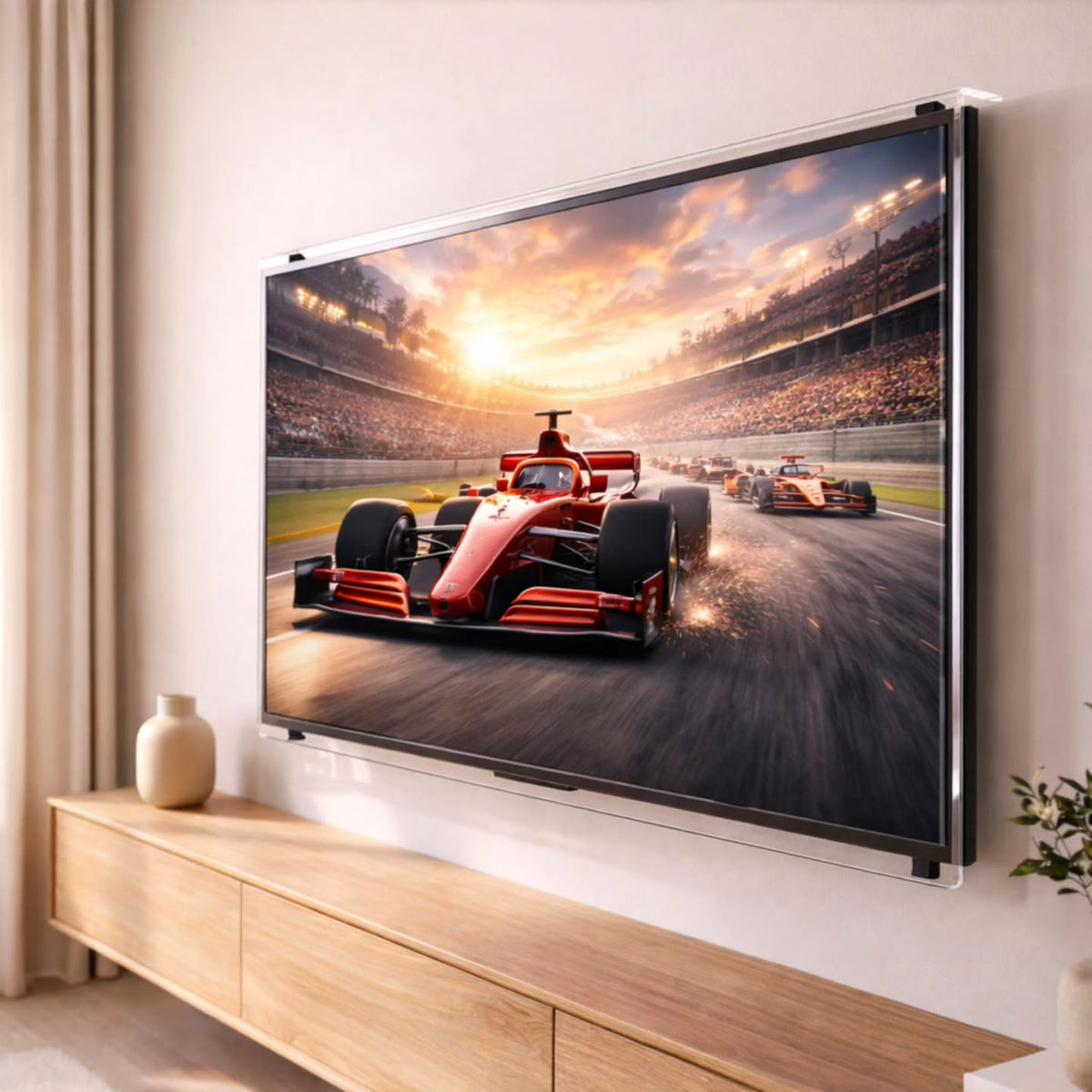
What Is the 3-3-3 Rule for TV Protection? How to Protect Your TV Screen
If you've been searching online for ways to protect your television, you may have come across the phrase “3-3-3 rule”.
But what does the 3-3-3 rule actually mean when it comes to protecting a TV?
The truth is, there isn't an official or universally recognised 3-3-3 rule for TV safety. The phrase is used for a number of completely different things online, which can make searching for an answer surprisingly confusing.
However, the idea of using three simple steps can be a useful way to think about protecting one of the most expensive and vulnerable pieces of technology in your home.
So let's look at the three biggest risks to your TV, three practical ways to reduce those risks, and three reasons TV screen protection could be worth considering.
The 3-3-3 Approach to Protecting Your TV
3 Common Causes of TV Screen Damage
Modern televisions have become thinner, lighter and more sophisticated.
Unfortunately, that can also mean the screen itself is vulnerable to accidental impact.
Here are three of the most common risks.
1. Accidental Impact
A television screen can be damaged by a surprisingly small accident.
A toy, remote control, game controller or another hard object hitting the screen can potentially cause permanent damage.
Unlike a scratch on a piece of furniture, damage to a modern flat-screen display isn't usually something that can simply be polished away.
A single impact can leave you with lines, black patches, cracks or a completely unusable display.
2. Children and Toys
Families with young children know that toys don't always stay where they're supposed to.
Balls, building blocks, toy cars and other objects can quickly become airborne, particularly when children are playing near the television.
You don't necessarily need a child deliberately hitting the TV for an accident to happen.
Sometimes it's simply a case of a toy being thrown or falling in the wrong direction.
3. Pets and Everyday Accidents
Children aren't the only potential source of accidental damage.
Pets can knock objects into televisions, jump against furniture or cause things around the TV to fall.
Then there are everyday accidents: moving furniture, cleaning, decorating, playing games or simply knocking something over.
The important point is that TV damage doesn't have to involve reckless behaviour.
Accidents happen.
3 Ways to Protect Your TV
So what can you actually do?
1. Position Your TV Carefully
Where possible, consider where your television is positioned.
A TV directly beside a children's play area, in a busy walkway or somewhere objects are regularly thrown carries more risk than one positioned away from high-traffic areas.
If your television is wall mounted, make sure the mounting system is suitable for the TV and securely installed.
A properly positioned television is the first step towards reducing the risk of accidental damage.
2. Secure the Television
If your TV is sitting on a stand or cabinet, consider using an appropriate anti-tip solution.
This is particularly important in homes with children or pets.
Wall mounting can also remove the television from the immediate reach of children and reduce the likelihood of the TV itself being knocked over.
However, wall mounting doesn't make the screen completely protected.
An object can still hit a wall-mounted TV.
That's where physical screen protection can provide an additional layer of defence.
3. Install a TV Screen Protector
A purpose-designed TV screen protector can act as a protective barrier between your television's original screen and potential impacts.
Rather than trying to keep every toy, pet or accidental object away from your television, a screen protector provides an additional layer of protection over the display.
This can be particularly useful in environments where accidental impacts are more likely.
For example:
- Family homes
- Homes with young children
- Homes with pets
- Schools
- SEN and specialist settings
- Hotels
- Student accommodation
- Pubs and sports bars
- Other commercial environments
Why Protect Your TV Before It Gets Damaged?
One of the biggest mistakes people make is thinking about TV protection after something goes wrong.
A television can be perfectly fine for years.
Then one accident happens.
And suddenly you're faced with a damaged screen and potentially a very expensive replacement.
1. TV Screen Damage Can Be Expensive
The screen is one of the most important and expensive components of a modern television.
In many cases, replacing the entire TV can make more financial sense than repairing a damaged display.
That means prevention can be considerably easier than dealing with the aftermath.
2. Insurance Isn't the Same as Protection
Some people assume their home insurance or TV protection plan will automatically solve the problem if their screen is damaged.
That isn't necessarily the case.
Policies vary, and excesses, exclusions and claim limits can apply.
And even when a claim is covered, you still have the inconvenience of dealing with a damaged television.
Insurance is designed to help after something goes wrong. A screen protector is designed to help prevent the damage happening in the first place.
They serve different purposes.
3. Peace of Mind
Perhaps the biggest benefit is simply not having to worry every time someone plays near the TV.
If you have children, pets or a busy household, you can't realistically prevent every accident.
Adding a physical layer of protection means you don't have to rely entirely on everyone being careful around the television.
Does a TV Screen Protector Affect Picture Quality?
This is one of the most common questions people ask.
A properly designed clear TV screen protector should allow you to continue watching your television normally while providing a protective layer over the display.
The quality of the material and the design of the protector matter.
For example, different environments may benefit from different types of protection.
A clear protector can be ideal when maintaining the original appearance of the TV is the priority, while an anti-glare option can be useful in environments where reflections are a concern.
What Thickness of TV Screen Protector Do You Need?
Not every TV screen protector is the same.
Thickness can vary depending on the level of protection required.
For a lower-risk environment, a thinner protector may be sufficient.
For homes, schools or commercial environments where a higher level of impact protection is required, a thicker acrylic protector can provide greater protection.
The right choice depends on:
- The size of your TV
- Where the TV is installed
- Who uses the space
- The likelihood of accidental impact
- The level of protection you want
It's also important to choose a protector designed specifically for your television rather than assuming one size fits all.
Why TV Size Isn't Always Enough
When buying a TV screen protector, you shouldn't rely solely on the advertised TV size.
Two televisions both described as “55 inch” can have different physical dimensions.
That's why a properly fitted protector should be selected using the actual width and height of the television, rather than simply choosing a protector based on screen size.
A good fit helps ensure the protector provides the intended coverage without interfering with the TV.
What About Children Who Throw Things at the TV?
This is one situation where TV protection can be particularly valuable.
If your child frequently throws toys or objects, the goal shouldn't be to simply tell them not to do it and hope for the best.
Of course, appropriate boundaries and supervision are important.
But accidents can still happen.
A TV screen protector provides an additional physical barrier, helping reduce the risk that an impact reaches the television's original display.
This can be especially relevant for families looking for ways to protect a TV from children or create a more resilient home environment.
What About Autism and SEN?
Some families have additional challenges when it comes to protecting technology.
Children with additional sensory needs, behavioural challenges or different ways of interacting with their environment may be more likely to hit, throw or interact physically with objects around them.
That doesn't mean every autistic or SEN child will behave this way.
Every child is different.
But where there is a known risk of impact, protecting expensive technology can be a sensible part of creating a safer and more practical environment.
A TV screen protector isn't a substitute for appropriate support, supervision or environmental adjustments.
It is simply another layer of physical protection.
The Simple 3-3-3 Takeaway
So, if you want a simple way to remember the principles of TV protection, think:
3 Risks
Impact.
Children and toys.
Pets and everyday accidents.
3 Solutions
Position your TV carefully.
Secure it properly.
Add physical screen protection.
3 Reasons
Reduce the risk of damage.
Avoid unnecessary replacement costs.
Enjoy greater peace of mind.
Again, this isn't an official “3-3-3 TV safety rule”.
It's simply an easy way to remember the fundamentals of protecting your television.
Protect Your TV Before You Need To
You don't buy a smoke alarm because you expect your house to catch fire.
You buy one because prevention and preparation matter.
TV protection works in much the same way.
You may never experience a toy hitting your screen.
You may never have a pet knock something into your TV.
You may never accidentally damage the display while moving furniture.
But if the risk is there, adding protection before something happens can be far easier than dealing with a broken television afterwards.
A TV screen protector provides an additional layer between your television and the accidents that everyday life can bring.
And sometimes, protecting your TV isn't about expecting something to go wrong.
It's about being prepared if it does.
Frequently Asked Questions
What is the 3-3-3 rule for TVs?
There is no officially recognised 3-3-3 rule specifically for TV protection. The 3-3-3 approach in this article is a simple framework covering three common risks, three ways to protect your TV and three reasons to consider protection.
Can a TV screen protector prevent a TV from breaking?
A screen protector is designed to provide an additional protective layer against accidental impacts. No protector can guarantee that a television will never be damaged, particularly in severe impacts.
Are TV screen protectors worth it?
For households and environments where accidental impact is a realistic risk, a TV screen protector can be a worthwhile preventative measure. The value depends on the cost of the TV, the environment and the likelihood of accidental damage.
Can you protect a TV from children?
Yes. Positioning the TV safely, securing it appropriately and adding a purpose-designed screen protector can all help reduce the risk of accidental damage from children.
Can you protect a wall-mounted TV?
Yes. A wall-mounted TV can still be vulnerable to impacts from toys, objects and everyday accidents. A suitable screen protector can provide an additional layer of protection.
What is the best TV screen protector?
The best protector depends on the TV, environment and level of protection required. Consider the actual dimensions of your TV, the thickness and material of the protector, the mounting method and whether you need clear or anti-glare protection.
Final Word
There may not be one official 3-3-3 rule for TV protection, but protecting your television doesn't have to be complicated.
Recognise the risks.
Reduce the risks.
Add protection where it's needed.
Because when a TV costs hundreds or even thousands of pounds, protecting the screen before an accident happens can make a lot more sense than waiting until it's too late.