
What Thickness Should a TV Screen Protector Be? Explained (2025 Buyer’s Guide)
18 December 2025 · Jessica Sands
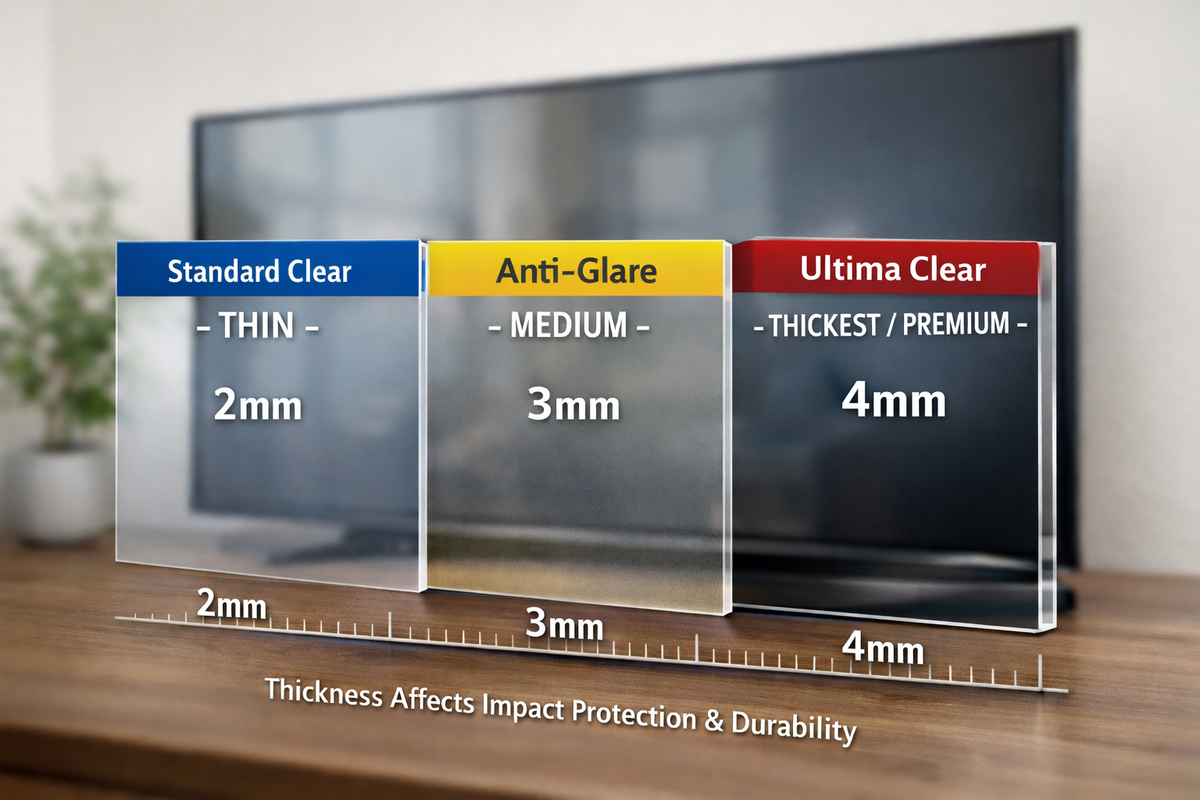
What Thickness Should a TV Screen Protector Be? Explained
One of the most common questions TV owners ask before buying a screen protector is:
“What thickness should a TV screen protector be?”
Too thin and it won’t protect your TV.
Too thick and people worry it might affect picture quality.
With modern TVs costing £500–£2,000+, choosing the right thickness is critical if you want to prevent TV damage without ruining your viewing experience.
In this guide, The TV Screen Protector explains exactly how thickness works, what actually matters, and how to choose the right level of protection for your home.
Why TV Screen Protector Thickness Matters
TV screens today are extremely fragile.
Most modern panels are only a few millimetres thick and can crack from:
-
Flying toys
-
Kids pressing the screen
-
Pets jumping or scratching
-
Accidental bumps
-
Remote controls hitting the display
-
Gaming controller accidents
A screen protector acts as a sacrificial layer, absorbing impact and pressure before it reaches the TV panel.
The thickness of that layer determines:
-
How much impact it can absorb
-
How well it resists pressure damage
-
How effectively it prevents cracks and scratches
Common TV Screen Protector Thickness Levels
Not all protectors are created equal. Here’s how thickness typically breaks down.
Thin Protectors (0.2–0.4mm)
Often marketed as “invisible” or “film-style” protectors.
Pros:
-
Very light
-
Barely noticeable
Cons:
-
Minimal impact protection
-
Little to no pressure resistance
-
Doesn’t stop cracks from toys or pets
-
Mostly cosmetic protection only
👉 Best for: Dust and light smudges only
👉 Not suitable for: Kids, pets, or real accident prevention
Medium Thickness Protectors (0.5–2mm)
These offer a balance between clarity and protection.
Pros:
-
Better scratch resistance
-
Some pressure absorption
-
Maintains excellent picture quality
Cons:
-
Limited defence against high-impact hits
-
May not stop harder objects
👉 Best for: Calm households with minimal risk
👉 Good entry-level protection
Thick / Impact-Resistant Protectors (3-4mm+)
This is where real TV protection starts.
Pros:
-
Absorbs strong impacts
-
Prevents cracks from toys and remotes
-
Stops pressure damage from hands or paws
-
Designed for families, pets, and active homes
Cons:
-
Must be engineered properly to maintain clarity
👉 Best for: Homes with kids, pets, gaming, or busy living spaces
This is the category used by The TV Screen Protector.
Does Thicker Mean Worse Picture Quality? (Myth vs Reality)
This is the biggest concern buyers have and one of the biggest myths.
MYTH:
A thick TV screen protector will reduce clarity.
REALITY:
Poor materials reduce clarity not thickness.
High-quality protectors use:
-
Optical-grade materials
-
Anti-distortion layers
-
Precision spacing
-
Light-corrective coatings
This means a properly engineered thick protector can look virtually invisible.
At The TV Screen Protector, our Ultima Clear range is designed to deliver maximum thickness with near-original picture quality.
How Thickness Prevents TV Damage
Thickness plays a key role in how damage is stopped.
Impact Absorption
Thicker protectors disperse force across the surface, preventing concentrated pressure points that cause cracks.
Pressure Resistance
When kids or pets press the screen, thicker protectors prevent internal pixel damage.
Scratch Prevention
Thicker layers stop claws, toys, and objects from reaching the TV panel.
Crack Prevention
Most cracks happen from one moment thickness buys you that crucial protection window.
Choosing the Right Thickness for Your Home
Here’s how to decide what you actually need.
Homes With Babies or Toddlers
-
Frequent touching
-
Slapping screens
-
Pulling themselves up
✅ Recommended: Thick impact-resistant protector
Homes With Children (3–10 Years)
-
Flying toys
-
Gaming controllers
-
Rough play
-
Ball games
✅ Recommended: Ultima Clear for maximum protection
Homes With Pets (Cats & Dogs)
-
Claws
-
Paws pressing the screen
-
Zoomies
-
Jumping near the TV
✅ Recommended: Thick scratch-resistant protector
Bright Rooms or Large Windows
-
Reflections trigger pets
-
Glare reduces viewing quality
✅ Recommended: Anti-Glare version with strong thickness
High-End TVs (OLED, QLED, Mini-LED)
-
Extremely fragile panels
-
High replacement costs
✅ Recommended: Premium thick protector with optical clarity
Thickness vs Mounting: What Protects the Screen?
Wall-mounting helps prevent tip-overs but it does nothing against:
-
Flying toys
-
Thrown remotes
-
Pet scratches
-
Screen pressure
Only screen thickness directly protects the display itself.
👉 Best setup: Wall mount + thick screen protector
The TV Screen Protector Thickness Options
At The TV Screen Protector, thickness is engineered not guessed.
Standard Clear
-
Strong everyday protection
-
Ideal for general family use
Anti-Glare
-
Same impact protection
-
Reduced reflections for bright room
Ultima Clear (Premium)
-
Thickest, strongest protection
-
Designed for kids, pets & high-risk homes
-
Maximum impact absorption
-
Near-invisible clarity
Final Verdict: What Thickness Should You Choose?
If your goal is:
-
✔ Prevent cracks
-
✔ Stop scratches
-
✔ Protect against kids & pets
-
✔ Avoid £500+ repair bills
Then thicker, impact-engineered protection is essential.
Thin film protectors won’t save your TV.
Proper thickness will.
That’s why families trust The TV Screen Protector to safeguard their screens without sacrificing picture quality.