
Baby-Proofing vs Child-Proofing: What Parents Overlook About TVs (2025 Guide)
04 December 2025 · Richard Sands
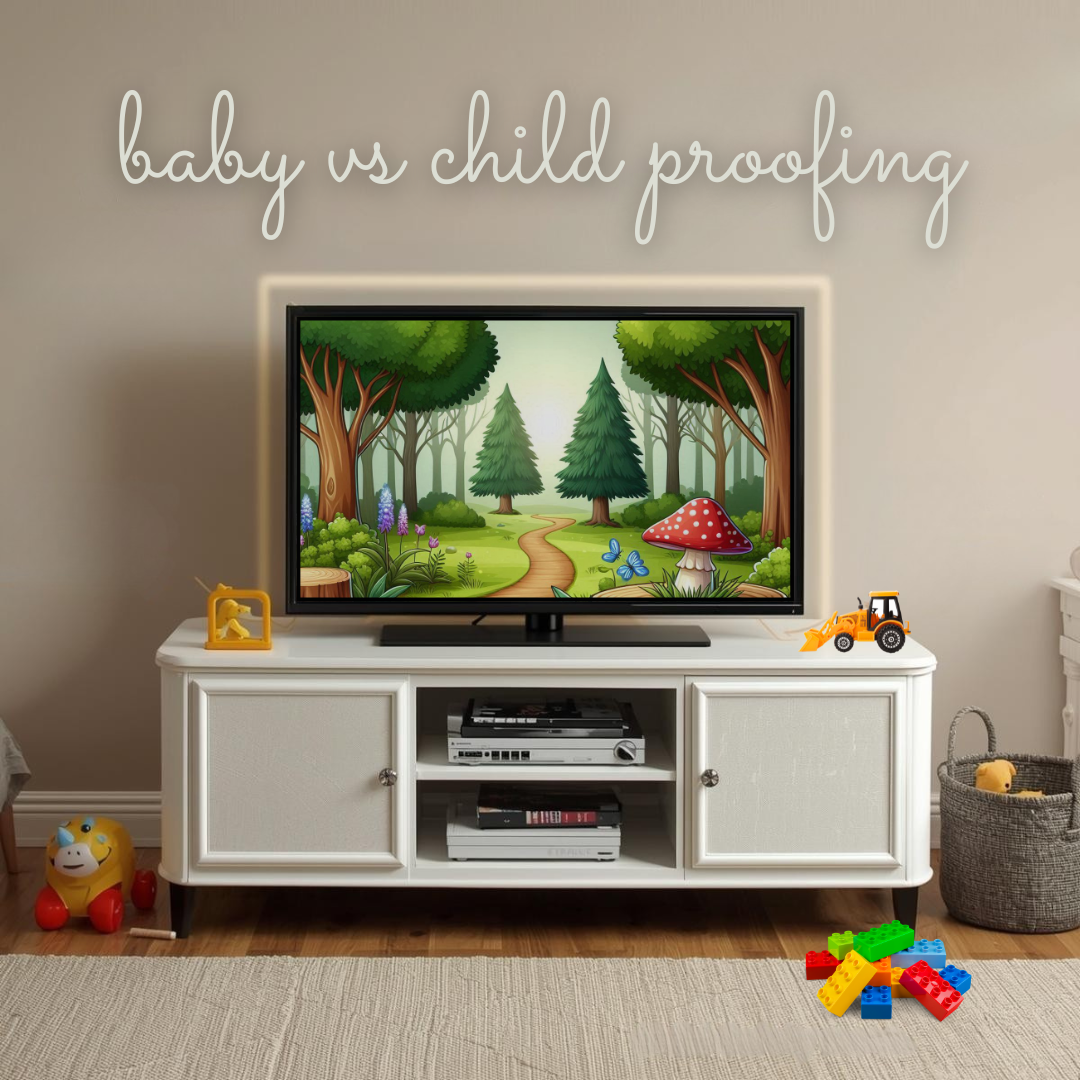
Baby-Proofing vs Child-Proofing: What Parents Overlook About TVs (2025 Guide)
When parents think about home safety, they picture stair gates, cupboard locks, plug covers, and foam corner guards. But there’s one major hazard most families overlook entirely:
👉 The TV.
Your TV isn’t just an entertainment centre it’s a toppling risk, a smash risk, and one of the most expensive items in your home for a child to damage.
And here’s the truth:
Baby-proofing and child-proofing are NOT the same when it comes to TVs.
What protects a curious 1-year-old won’t protect your boisterous 5-year-old… and vice-versa.
As experts in TV protection, The TV Screen Protector is breaking down EXACTLY what parents miss and how to keep your TV safe at every stage.
Why TVs Are the Most Overlooked Hazard in Baby-Proofing
Parents are taught to secure the big dangers:
✔ Stairs
✔ Sharp corners
✔ Cleaning supplies
✔ Fireplaces
✔ Kitchen areas
But TVs? Most families simply place them on a stand and assume they’re fine.
Yet in the UK and US combined, thousands of TVs are smashed every year, often by toddlers and small children doing completely normal things:
-
Pulling themselves up on the TV stand
-
Slapping or tapping the screen
-
Throwing toys
-
Grabbing cables
-
Leaning on or climbing the TV
A TV is one of the few hazards that is both:
A safety risk to children and an expensive financial loss for parents.
SECTION 1: Baby-Proofing the TV (0–2 Years)
At this stage, babies aren’t trying to be destructive they’re exploring. But their curiosity leads to some of the most common TV accidents.
Baby-Proofing Risks:
-
Pulling on the TV stand for balance
-
Tugging HDMI or power cables
-
Slapping the screen
-
Drooling, touching, smearing food on the screen
-
Crawling into the TV stand or bumping into it
Baby-Proofing Solutions:
1. Use a Strong, High-Quality TV Screen Protector
Babies love touching things. The TV’s bright colours attract little hands instantly.
A protector like the Standard Clear, Anti-Glare, or Ultima Clear from The TV Screen Protector prevents:
-
Fingerprint smears
-
Scratches
-
Accidental cracks
-
Damage from toys, remotes, teethers, or bottles
This is the bare minimum for baby safety around screens.
2. Secure or Hide All TV Cables
Babies pull cables without realising they’re pulling the TV.
Use:
-
Cable covers
-
Cord management strips
-
Stick-on trunking
-
Ties to shorten hanging wires
3. Consider Wall-Mounting Early
Even if you eventually move your TV lower, a baby stage is the safest time for a high mount.
4. Anchor Furniture Under the TV
If the TV is on a stand, anchor it. Babies use anything available to climb and pull.
SECTION 2: Child-Proofing the TV (Ages 3–10)
This is where parents underestimate the danger the most.
Because now children can jump, throw, wrestle, and launch objects and this is the age where TVs break the most.
Child-Proofing Risks:
-
Throwing toys (balls, cars, controllers, blocks)
-
Wii remotes / gaming controllers hitting the screen
-
Rough play in front of the TV
-
Falling into the TV while jumping on the sofa
-
Pulling the TV forward while watching closely
-
Climbing furniture
-
Bouncing objects off walls that rebound into the screen
Child-Proofing Solutions:
1. Upgrade to the Strongest Screen Protection Possible: Ultima Clear
The Ultima Clear from The TV Screen Protector is designed for high-impact protection.
It helps prevent damage from:
-
Flying toys
-
Hard throws
-
Remote controls
-
Accidental kicks
-
Rough play
-
Kids touching the screen
-
Pets colliding with the TV
For families with active children, this is the #1 must-have to prevent TV damage.
2. Combine a Wall Mount With a Protector
Just wall mounting isn’t enough a flying toy still breaks the screen.
The combination of a secure mount + protector is the strongest setup.
3. Use Games-Safe Rules
Teach children to stand a safe distance away when using:
-
Nintendo Switch
-
VR systems
-
Wii consoles
-
Dance or movement games
Many broken screens come from enthusiastic gamers.
4. Don’t Let Toys Live in the TV Zone
Balls, blocks, and Nerf guns should be kept away from the entertainment area.
This reduces impact accidents dramatically.
SECTION 3: Baby-Proofing vs Child-Proofing: The Big Differences
| Age | Risk Type | Protection Needed | What Parents Get Wrong |
|---|---|---|---|
| 0–2 (Baby) | Touching, grabbing, pulling cables | Basic screen protector + cable covers | Thinking babies are too small to damage TVs |
| 3–5 (Toddler) | Throws, climbing, pushing TV | Strong screen protector + anchoring | Trusting old baby-proofing, even though behaviour changes |
| 6–10 (Child) | Impact damage, gaming accidents | Ultima Clear for max protection + wall mount | Assuming “they know better now” they don’t when toys fly |
The key insight:
👉 What protects from baby hazards does NOT protect from older children.
Parents must upgrade their TV protection as their child grows.
SECTION 4: Why A TV Screen Protector Is the #1 Fix Parents Overlook
Most families baby-proof everything except the most fragile item in the entire living room.
The TV screen is just millimetres thick.
A single toy can cause:
-
Cracks
-
Internal panel damage
-
Dead pixels
-
Total screen failure
-
Repairs that cost £300–£700
-
Or replacement if the screen can't be fixed
A screen protector from The TV Screen Protector is the cheapest prevention for the most expensive problem.
Your Options:
-
Standard Clear – great for babies and general household protection
-
Anti-Glare – perfect for bright rooms, protects AND reduces reflections
-
Ultima Clear – the strongest protection for families with active kids or gaming areas
This isn’t just baby-proofing it’s long-term TV protection.
Final Thoughts: Baby-Proofing ≠ Child-Proofing: Parents Need Both
Your child grows, and their behaviour changes and so should your TV protection.
Baby-proofing stops early curiosity.
Child-proofing stops real damage.
In both cases, a screen protector from The TV Screen Protector is the easiest, most effective, and most affordable way to prevent accidents, avoid costly repairs, and keep your home safe.